.png?strip=true)
Under Eye:
A Closer Look Beneath the Eye Area




What happens
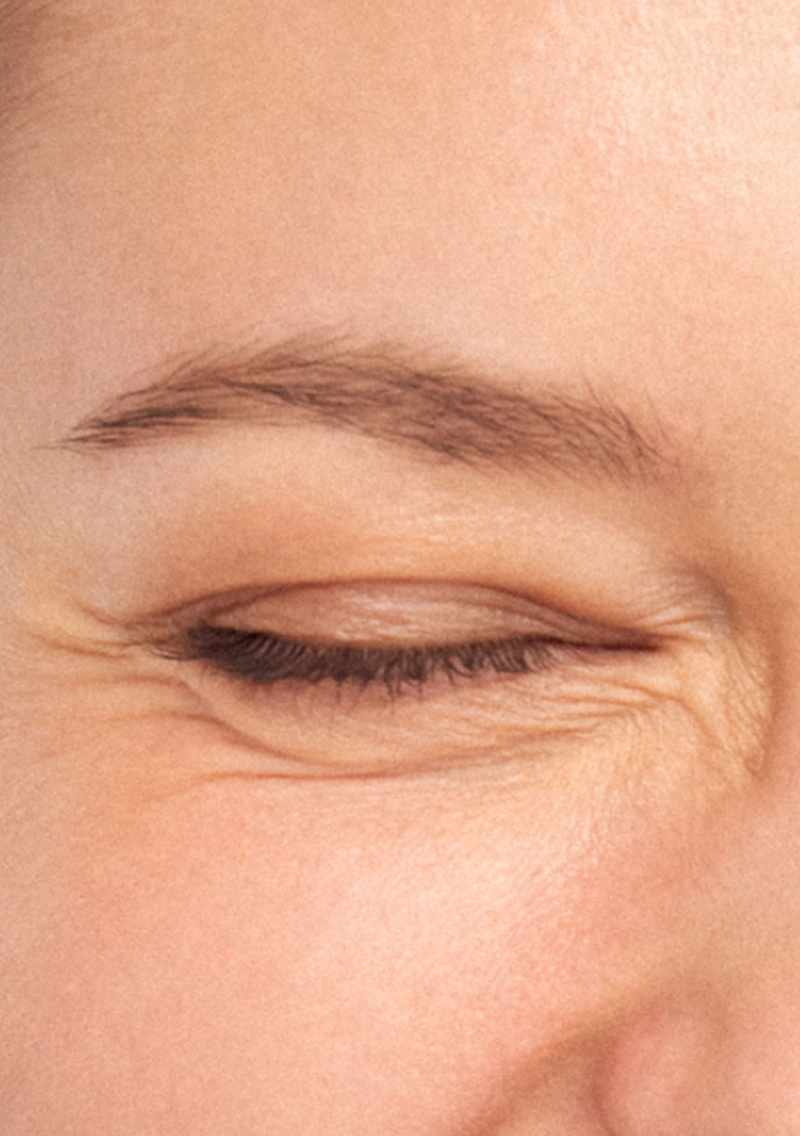
The area around the eyes is one of the first places to show structural changes. Over time, the skin can become thinner and less elastic, and the tissues supporting the eyelids may lose volume or firmness.
.png?strip=true)
These changes can lead to concerns such as under-eye hollows, fine lines, wrinkles, or a crepey appearance¹. Many people also notice dark circles, which may be caused by shadowing from volume loss, visible underlying structures, or pigmentation differences².
Not all concerns around the eyes are related to aging.
Some individuals naturally have deeper tear troughs or structural shadowing from a young age.
.png?strip=true)
Other concerns, such as pigmentation-related dark circles, eyelid ptosis, or crow’s feet, have different causes and may require approaches other than hyaluronic acid injections³.
.png?strip=true)
How treatment helps
Concerns in the under‑eye area can arise from several different factors, and each requires a tailored approach. Some people experience hollowness due to volume loss, while others notice fine lines, skin crepiness, puffiness, or dark circles. Because these concerns have different origins, there is no single treatment that addresses all of them⁴.

Under-eye concerns can have different origins and shapes, and not all dark circles are the same. The term “dark circles” often suggests a single problem with a single solution. The reality is far more nuanced as there isn’t just one type of dark circle, nor a one-size-fits-all treatment⁴.
Hyaluronic acid fillers
May be considered when under‑eye hollows are
related to volume changes or structural shadowing.
Skinboosters
or other hydrating injectables can be used when the main issue is reduced skin quality, such as fine lines or crepiness.

An accurate evaluation must be performed by a qualified healthcare professional,
who can determine what your under-eye area truly needs.
Is it worth it?
Treatments worth talking about
.png?strip=true)

Before

After
.png?strip=true)